• Add description, images, menus and links to your mega menu

  • A column with no settings can be used as a spacer

  • Link to your collections, sales and even external links

  • Add up to five columns

  • A column with no settings can be used as a spacer

  • Link to your collections, sales and even external links

  • Add up to five columns

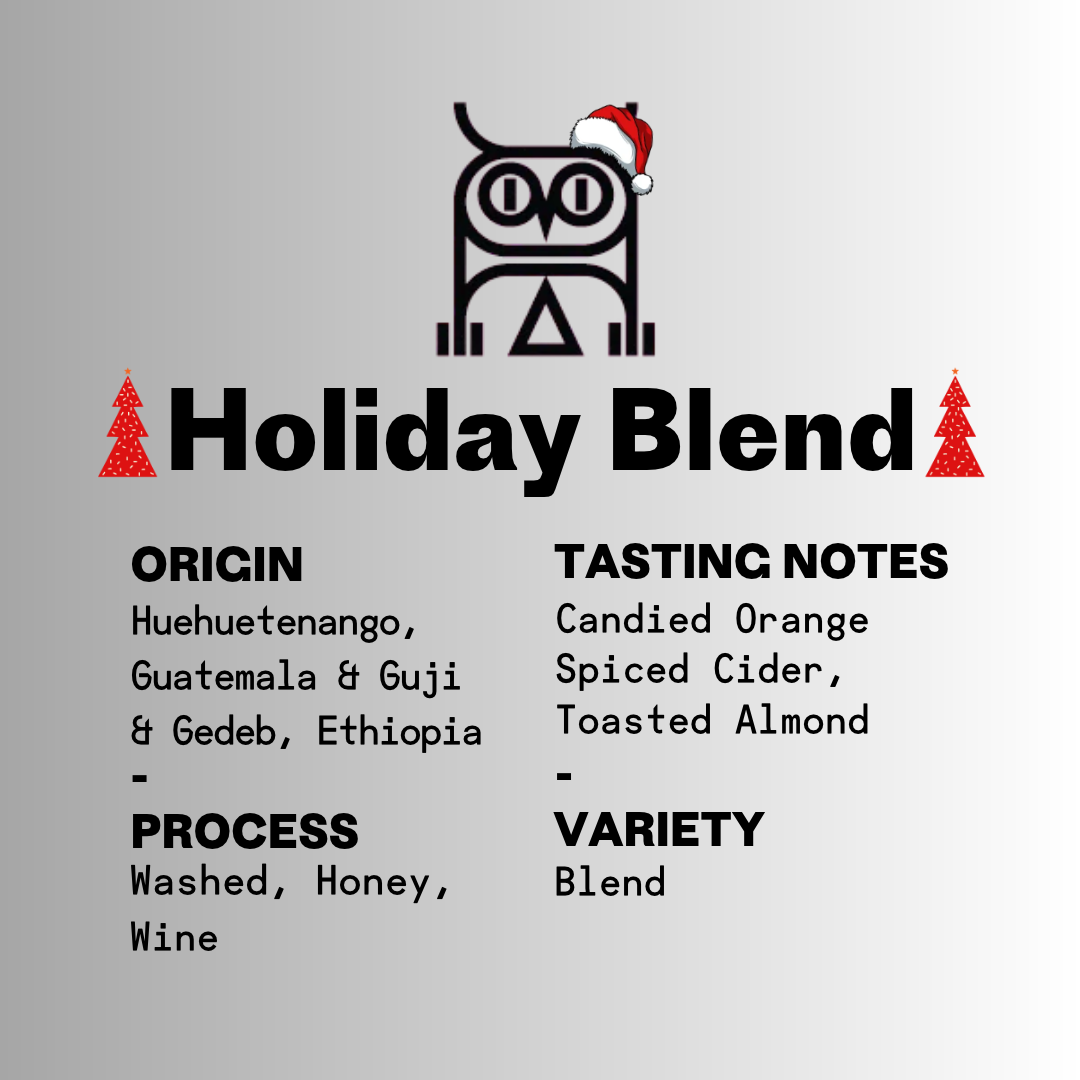
  • Holiday Blend

    Tastes Like: candied orange, spiced cider, toasted almond

    Size

    About this coffee

    For a limited time only, enjoy our seasonal special: Second State Holiday Blend. This annual custom is methodically cupped to perfection by our talented roasting team and, every year, it flies off the shelves. Taste the holidays: candied orange, spiced cider, and toasted almond.

    Check our playlist pairing below or follow us on Spotify  to enjoy tracks curated for all your favorite coffees

    Meet the producer

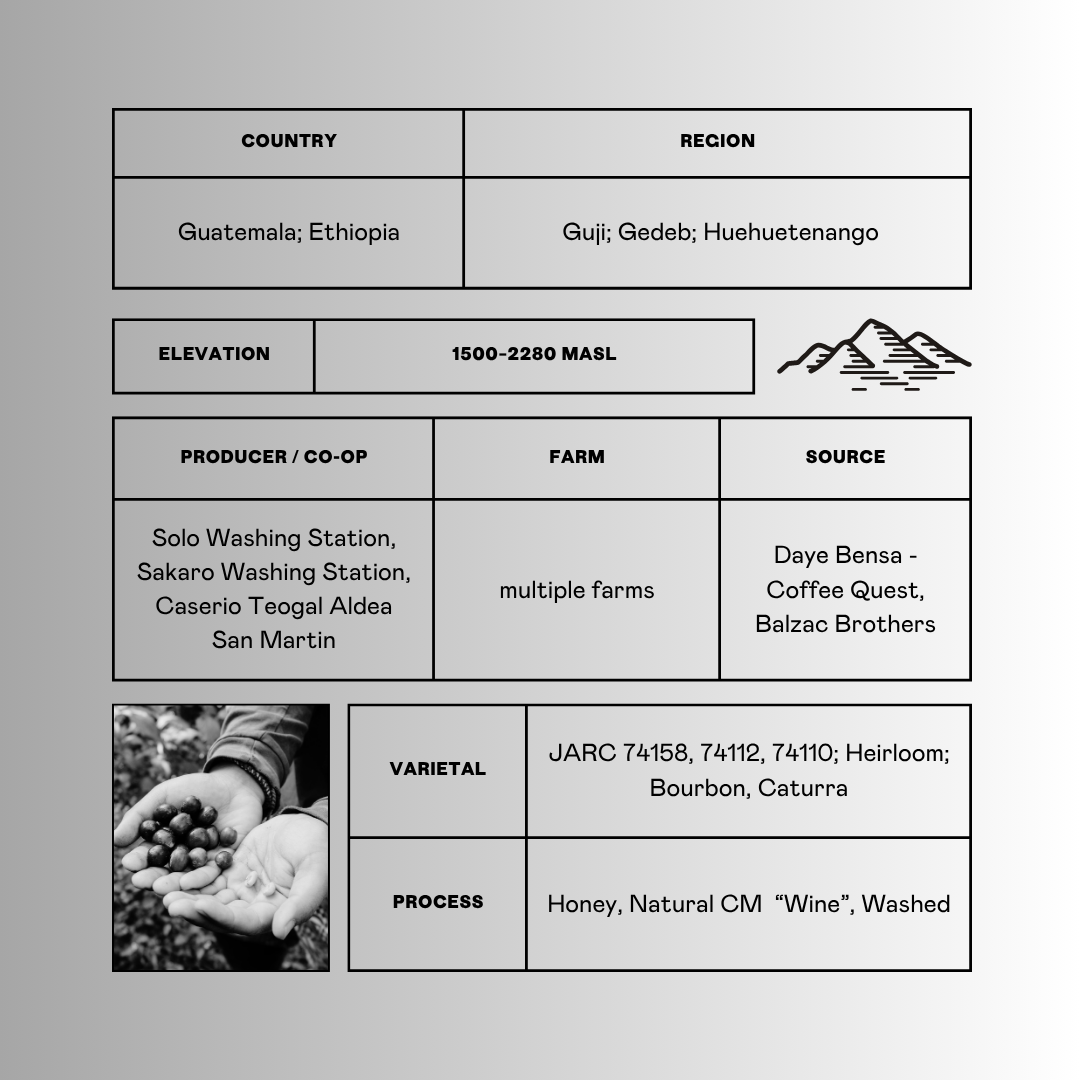
    Solo Washing Station, Worka Sakaro, Caserio Teogal Aldea San Martin

    Guatamela & Ethiopia

    Going into this year's blend: "Othosololo" from Solo Washing Station, Sakaro Washing Station, and "Ixlama" from the Caserio Teogal Aldea San Martin Mill in Huehuetenango. Three features from our single-origin offerings list.

    Many, many hands grew the cherries needed to make this coffee happen. Around 150-200 farmers in the Guji growing region of Ethiopia, over 400 farmers in the Gedeb growing region of Ethiopia, and around 120 Maya family farmers from Huehuetenango.

    Elevation
    1524 - 2380 MASL
    Variety
    Blend

    Process

    Washed; Natural Wine; Honey

    The primary component of this coffee is made up of Honey Processed JARC 74158, 74110, and 74112. The secondary component is a Natural Wine-Processed Heirloom variety. The third is a Washed Process Caturra and Bourbon. The final combination is chosen at our roastery through several blending taste tests using various proportions of these beans. This allows us to curate a flavor that's perfect for the season!

    The Honey Process

    Fresh, carefully selected red cherries are delivered to the Solo Station in Guji and de-pulped without the use of water. The wet parchment is then dried on raised beds for 12 to 13 days, with careful monitoring to ensure an even drying process. We get dried fruit character, softer acidity, body, and rounded nuttiness from this portion of the blend.

    The Wine Process

    After the coffee is floated, it is placed into special plastic bags/canisters, flushed with carbon dioxide and nitrogen gas, and monitored over 3-7 days until fermented adequately (this varies based on mucilage content and environmental conditions). Once the cherries reach the desired pH and color, they are removed from the bags and transferred to drying tables to complete the process. This technique creates an oxygen-free environment that triggers an in-cherry intracellular fermentation — a technique borrowed from winemaking known as carbonic maceration. Hence, "wine process." The main difference between true anaerobic and carbonic maceration is that anaerobic ferments will typically rely on external yeasts and bacteria, while carbonic maceration specifically uses the C02 and nitrogen flushing to force activity into the cherries cells. This contributes a deep level of fruitiness, body, and sweetness to the cup.

    The Washed Process

    At mill, the coffees are sun-dried on cement patios for four days before being placed in "guardiolas," a type of coffee dryer patented by a Guatemalan resident in 1872. The coffees are then computer-sorted by color and separated by density mechanically, resulting in a superior, clean, and juicy cup with a chocolate like finish. This portion of the blend rounds the overt fruitiness stemming from the two Ethiopians and creates a balanced flavor profile.

    Washed; Natural Wine; Honey Washed; Natural Wine; Honey

    Experience

    Tips for Brewing